★★★★★ Rated 4.5/5 — 204 Google reviews · 576 reviews · 5.0/5 on Tripadvisor · Written by a licensed Marrakech tour operator, on the road since 2011
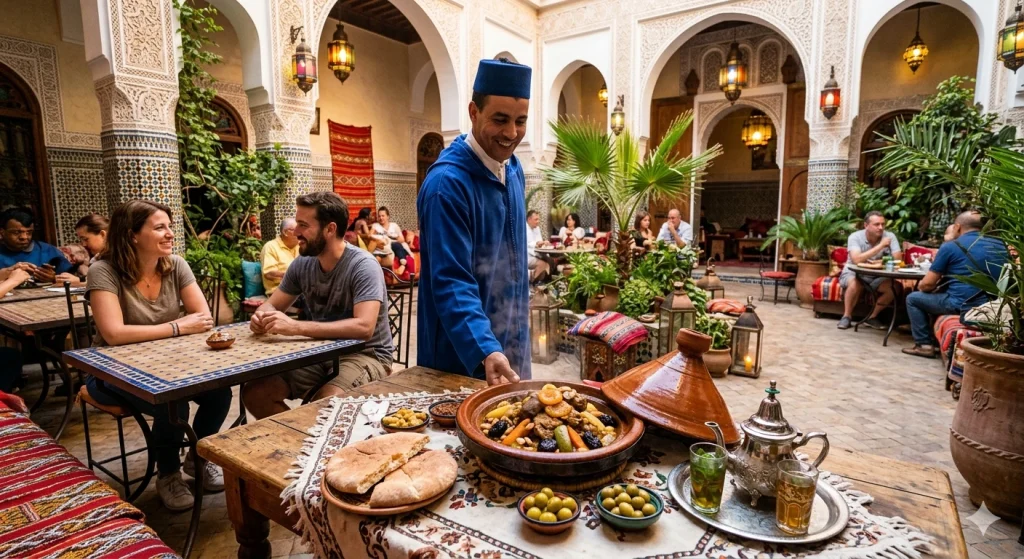
Vegetarians hear “tagine country” and worry. Relax: Moroccan cooking is built on vegetables, pulses, grains and fruit to a degree the meat-centred menus hide — you will eat memorably here. The real skill is knowing what to order and what to ask.
The naturally vegetarian canon
Vegetable couscous (Friday’s finest), vegetable tagine with preserved lemon and olives, harira‘s meatless versions, zaalouk (smoky aubergine), taktouka (peppers and tomato), loubia (white beans), bissara (fava soup, the north’s breakfast), msemen with amlou and honey, and fruit that tastes like fruit again. Breakfast, frankly, is a vegetarian festival everywhere.

The one question to always ask
Moroccan kitchens traditionally build flavour on meat stock — so the magic sentence is “bla lham, bla marka dyal lham” (without meat, without meat broth). Tourist restaurants understand “vegetarian” instantly; humble places understand the sentence. Vegans add cheese/eggs/honey to the list and manage nearly as well, with breakfast needing the most attention.
Eating vegetarian on the road
This is where private travel quietly shines: tell us once, and every kitchen along your route — riads, the desert camp, the mountain lunch stop — knows before you sit down. It is a standing line in our trip notes, covered under dietary requirements on the food & drink routes and in the food FAQ.
The honest limitation
Menus at simple roadside grills can bottom out at omelette-salad-chips — decent, not memorable. The fix is planning lunches where the vegetables live, which is precisely a route-design job. Consider it handled on plan your journey.
Everything on this page can be woven into a private itinerary — start from a private Marrakech day with a food-savvy guide, and we shape the rest around you.
Samira El Idrissi — Samira writes about Moroccan cooking and the culture around it: souk produce, home kitchens, street food you can trust your stomach to, and the pastry trays that appear whenever a Moroccan family decides you look thin. She tests the food safety advice she gives, which her colleagues consider either dedication or recklessness depending on the week.