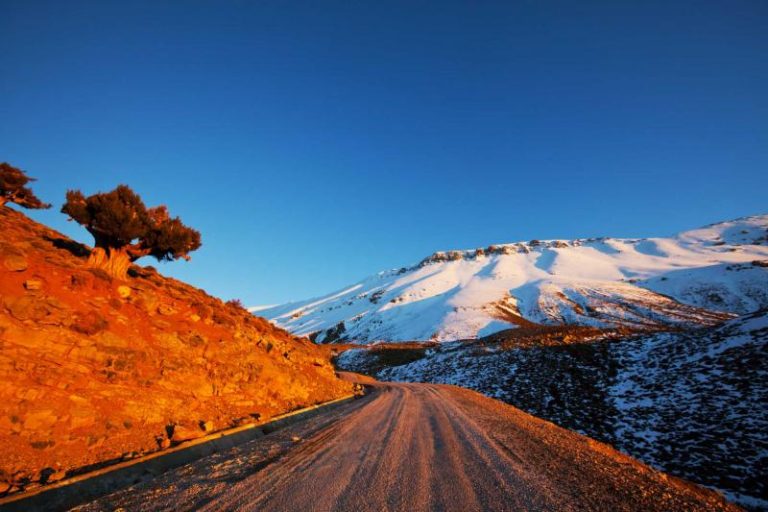
Travellers book the desert night on faith — few know what the hours actually contain. Here is the evening as it really unfolds at the camps we use in the Erg Chebbi, from saddle to sunrise.
5pm — the camel hour
You mount at the dune line as the heat breaks, and the caravan walks forty-five unhurried minutes into the sand sea. The light does its famous work; your camera fills itself. (Nervous riders: the pace is a walk, the saddles are padded, and the 4×4 can carry anyone who prefers wheels.)
7pm — arrival and the golden hour
Tea on arrival, shoes off, and the only appointment that matters: climbing the nearest crest for sunset. Your tent waits below — real bed, proper linen, a private bathroom with a hot shower that still surprises everyone.
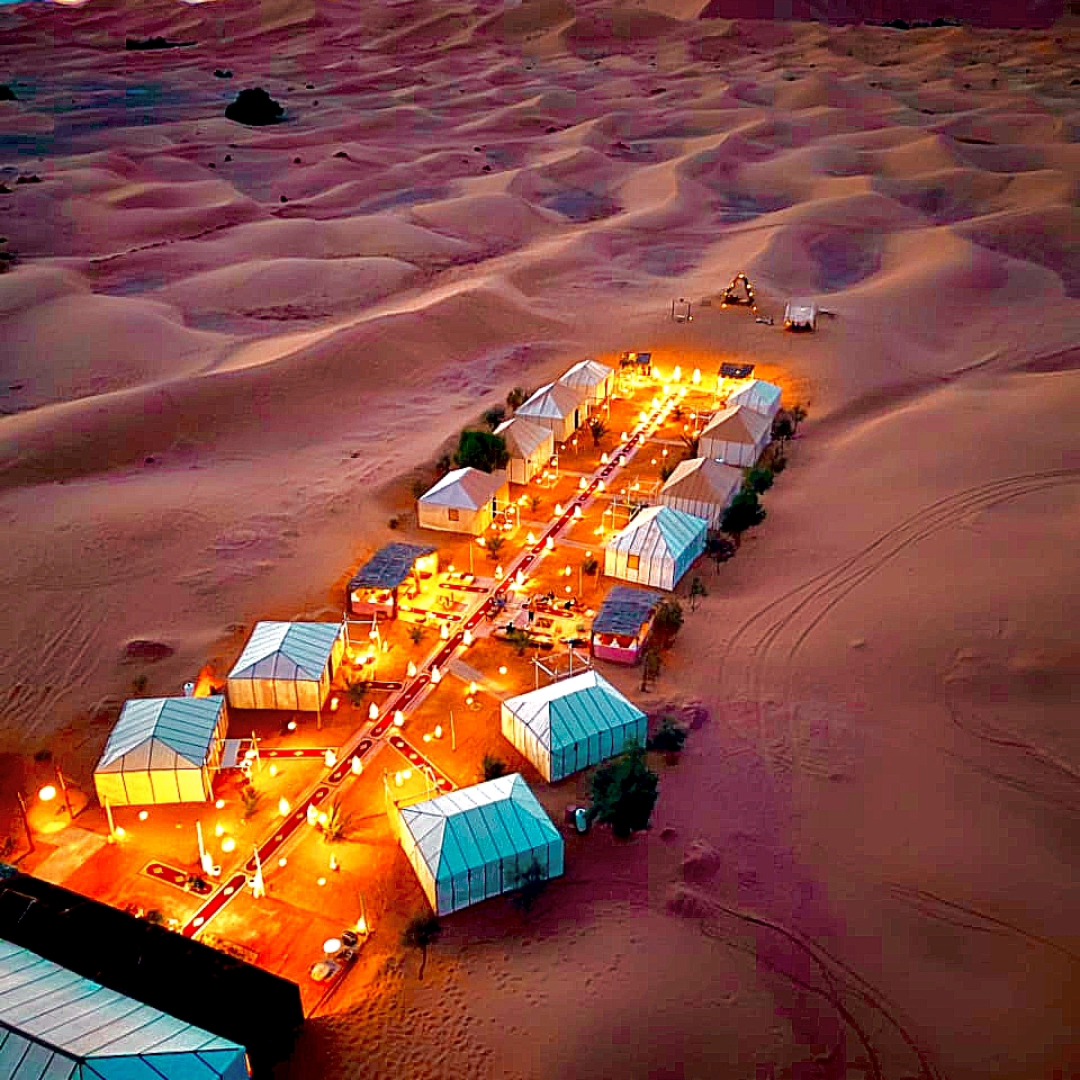
8:30pm — dinner and drums
Dinner is served at table — harira, tagine, fruit, better than anyone expects this far from a road. Then the fire, and the crew’s drums: not a floor show, just musicians who grew up with these rhythms, playing until the small hours or until the stars win the argument.
Dawn — the reason you came
A knock before first light for the dune-top sunrise, then breakfast and the camels (or the 4×4) back out. You will be tired all day and talk about it for years.
Booking the night
This exact night sits inside every route on our desert pillar — most directly the 4-day Erg Chebbi circuit (from €600). What to pack for it is a short guide of its own.
Fatima Zahra Ouazzani — Fatima Zahra covers the desert south — Merzouga, Zagora, the Draa Valley and the oasis routes between them. Her writing keeps returning to the people of the region: the families who run the camps, the date harvest in autumn, the way a khettara irrigation channel organises an entire palm grove. She is our reference for travellers who want the Sahara with its context still attached.