★★★★★ Rated 4.5/5 — 204 Google reviews · 576 reviews · 5.0/5 on Tripadvisor · Written by a licensed Marrakech tour operator, on the road since 2011
“Food tour” spans everything from a gum-and-dates sample walk to a day that rearranges how you eat. Having built ours from the eating side, here is what a Morocco food tour should include — use it as a checklist on anyone, including us.
The morning: markets while they matter
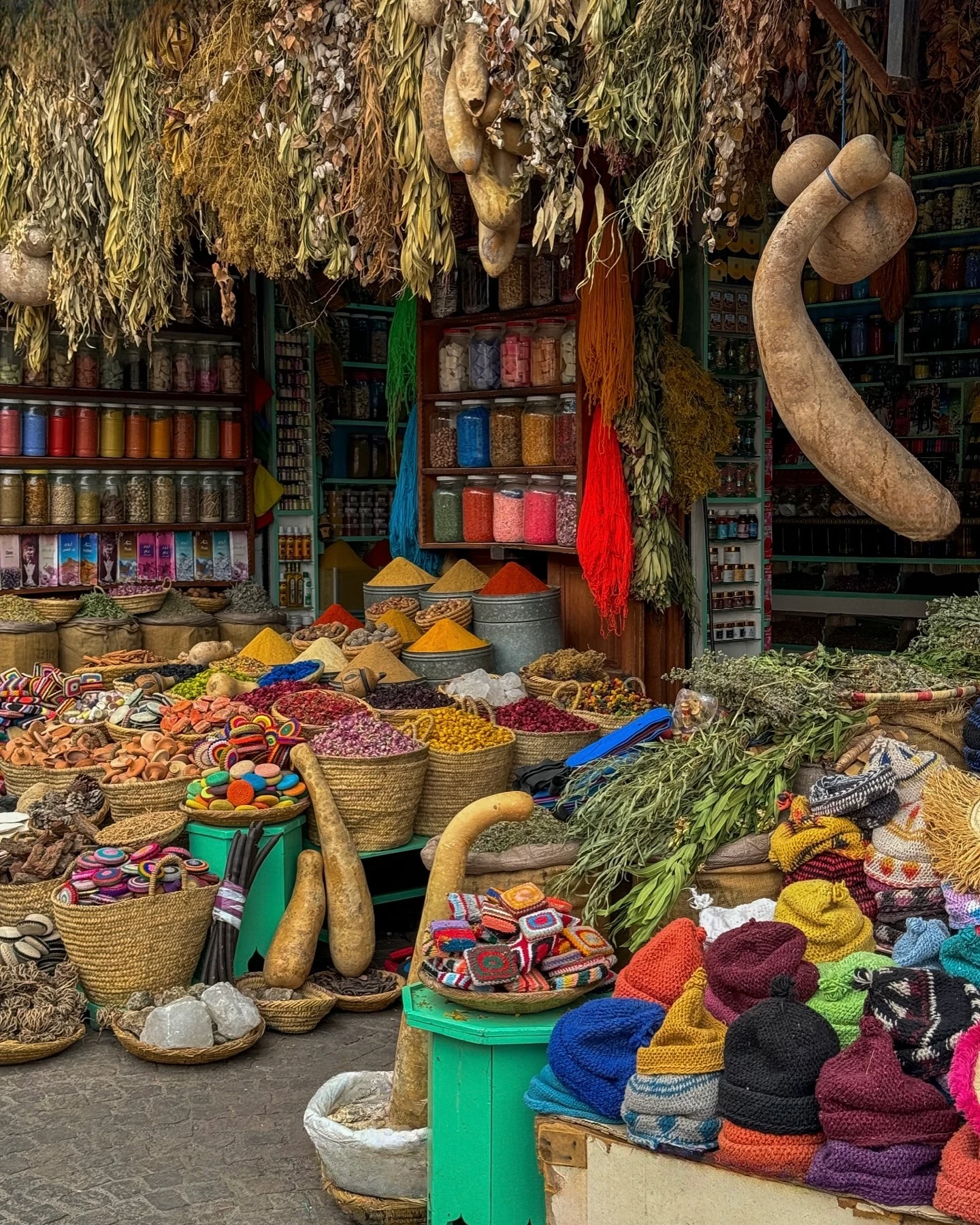
A real tour starts where cooks start — the produce souk before ten: olive pyramids decoded, the spice stalls’ honest ras el hanout, preserved lemons by the barrel, a wall-oven bakery where the neighbourhood’s dough arrives on planks. Tastings happen standing up, vendor by vendor.
The midday: counters, not showrooms
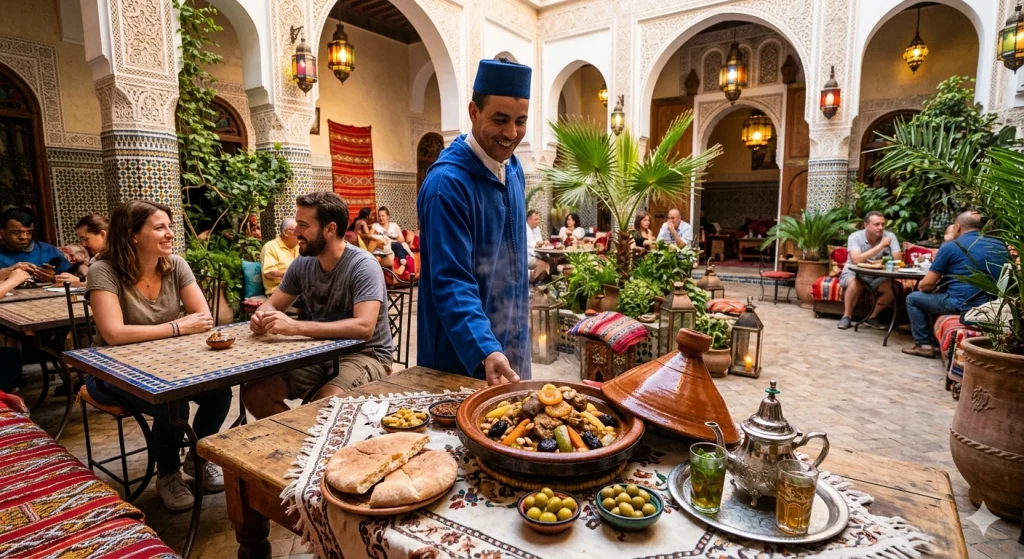
Lunch at the specialist stalls — mechoui by weight, tanjia from the ashes, sardines off the grill — with the guide ordering in Darija and explaining what made each pot famous. If a “food tour” seats you in a tourist restaurant at noon, it is a restaurant transfer service.
The afternoon options
A cooking class to take the knowledge home; or the sweet circuit — pastry shops, sellou, mint tea poured with theatre; or the argan and amlou route if the coast is near.
The standards that separate good from theatre
Small group or private; tastings included, not upsold; vendors who greet the guide by name; dietary needs handled in advance (vegetarian version fully possible); and zero commission detours. Ours run private by default — like everything we do — woven into the food & drink routes city by city.
Everything on this page can be woven into a private itinerary — start from a private Marrakech day with a food-savvy guide, and we shape the rest around you.
Driss Bouzidi — Driss covers food and drink. He plans entire itineraries around a single dish — a Friday couscous in the Middle Atlas, a tanjia slow-cooked in Marrakech ashes, sardines at the Essaouira port — and then writes up where the detour is genuinely worth it. His restaurant notes favour places that feed locals on a Tuesday over places that photograph well.