★★★★★ Rated 4.5/5 — 204 Google reviews · 576 reviews · 5.0/5 on Tripadvisor · Written by a licensed Marrakech tour operator, on the road since 2011
Moroccan cooking is slow food that predates the slogan: charcoal, clay, saffron and patience. These are the dishes that define the table — and, since geography is flavour here, the places that make each one best.
The essential seven
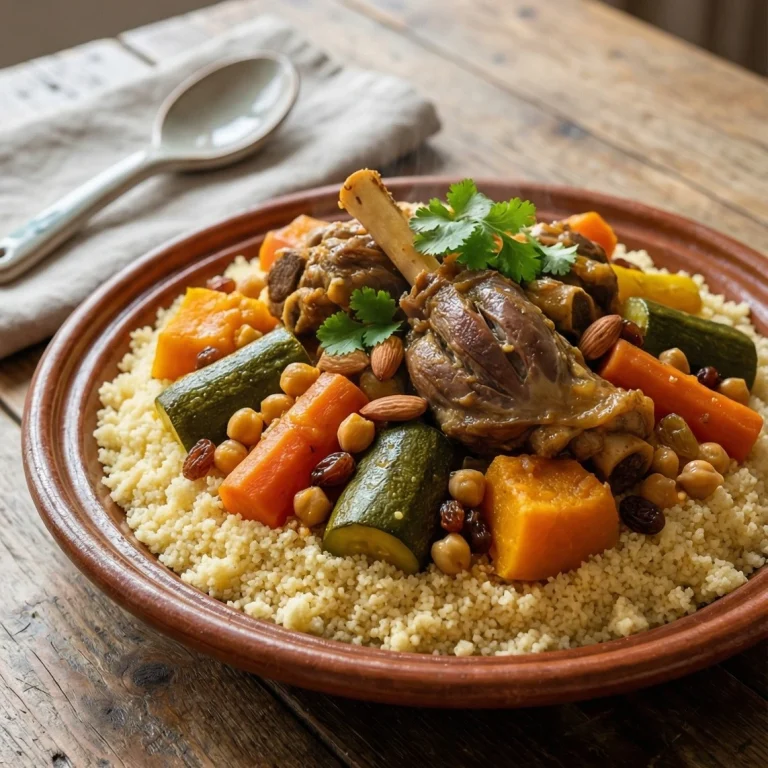
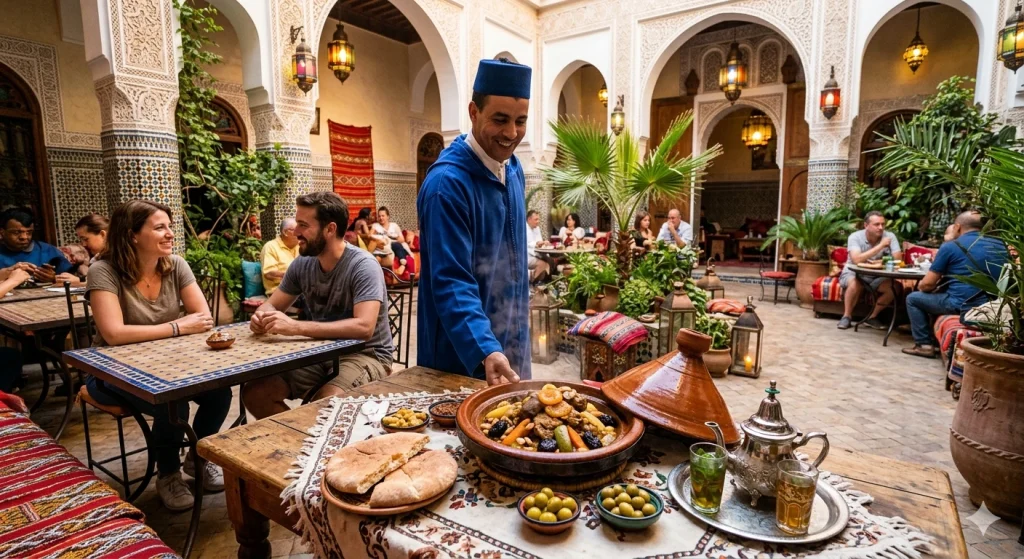
Tagine — the cone-lidded stew in infinite variations; lamb-and-prune in the cities, kid goat in the mountains. Couscous — Friday’s dish, rolled by hand, best at a family table. Pastilla — Fes’s sweet-savoury masterpiece of pigeon (now usually chicken), almonds and cinnamon in tissue-thin warqa. Tanjia — Marrakech’s bachelor stew, slow-cooked overnight in the hammam embers. Harira — the tomato-lentil soup that opens Ramadan evenings. Grilled sardines — Essaouira’s port stalls, straight off the boats. Mechoui — whole roast lamb, for days that deserve it.

Street food worth the queue
Msemen flatbreads off the griddle, bessara (fava soup) at dawn, snail broth for the brave, sfenj doughnuts by the paper bag. Rule of thumb: eat where the queue is Moroccan and the turnover fast.
And to drink
Mint tea, poured from a height, sweet by default — accepting a glass is accepting friendship. Fresh orange juice everywhere; Guerrouane wines for the curious (yes, Morocco has vineyards — our coastal 16-day route visits).
Taste it all on the road
Our gastronomy-flavoured discovery week builds in a food tour, a home dinner and a cooking class. The food & daily life FAQ handles diets, budgets and street-food confidence.
Want to eat your way through all of them in one trip? Our 7-day Morocco food tour builds the week around these dishes — Fes bakeries and a family tajine, Marrakech street food, Essaouira’s port grills and a Guerrouane vineyard tasting, every table booked in advance.
Everything on this page can be woven into a private itinerary — start from Morocco food & drink or book a private Marrakech day with a food-savvy guide, and we shape the rest around you.
Driss Bouzidi — Driss covers food and drink. He plans entire itineraries around a single dish — a Friday couscous in the Middle Atlas, a tanjia slow-cooked in Marrakech ashes, sardines at the Essaouira port — and then writes up where the detour is genuinely worth it. His restaurant notes favour places that feed locals on a Tuesday over places that photograph well.