
Sustainability
A page we would rather not need
For a fifteen-year-old agency of our size, sustainability is not a programme with a logo — it is whether the camps we use next season are still standing, whether the families we work with can plan a year ahead, and whether the dunes look the same after we leave. What follows is how we actually operate, written plainly.
Local employment, all year
Our drivers and guides are Marrakech professionals, not seasonal day labour. Work stays in the region in January as well as in April.
Family-run camps and riads
Nights are booked directly with the Moroccan families who run them, at their price. No middle layer taking the margin out of the valley.
Small, private departures
One group per vehicle, one vehicle per departure. The desert does not need convoys, and neither does your trip.
Leave-no-trace rules
Everything that enters the dunes with us leaves with us. Refillable water on board, waste carried back to town, no burning at camp.
Animal welfare on every ride
Camels at walking pace, rested between rides, loads kept light. If an animal is not fit to work, it does not work that day.
Respect for living heritage
Kasbahs and villages on our routes are homes, not film sets. We brief every traveller on customs, dress and photography before we arrive.
Three places. Three commitments.
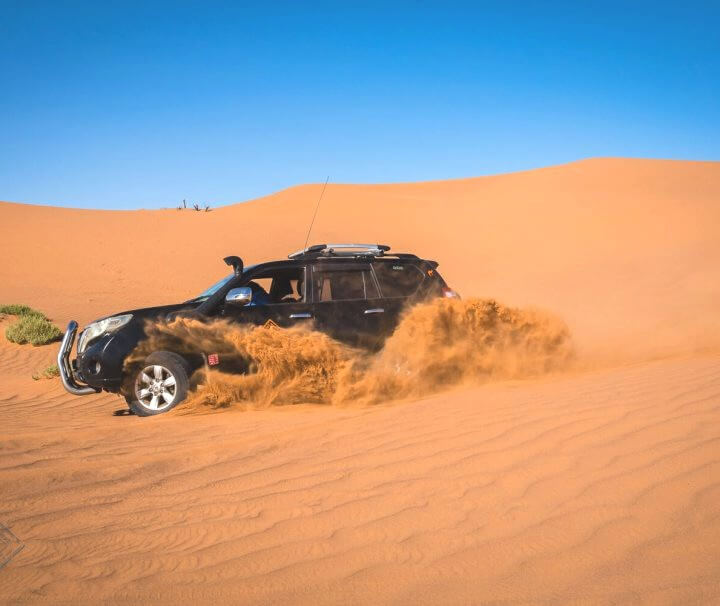
Marrakech — where we come from
Our base, our licence and our team are here. Every booking starts and ends in this city, with the people who answer your messages — not a call centre representing us from somewhere else.
Zagora & Merzouga — the camps we return to
The desert camps on our circuits are family-run and paid at their own rates, season after season. Returning to the same partners is our version of a sustainability policy: it only works if it works for them too.
The High Atlas — walking with the valleys
Our treks hire mountain guides and muleteers from the villages the trails pass through, so a summit day feeds the valley it starts in.
The record, in plain writing
One team, one inbox
If any of this matters to how you want your Morocco built, the conversation is one message away — the WhatsApp number on this site reaches the people who run the tours, not a sales desk. Ask us the uncomfortable questions; we would rather answer them before you book.
 The Kingdom of Morocco