Six days is where the Marrakech–Sahara journey stops being a dash and starts being a trip: the big Merzouga dunes and the gorges and a second desert-region night, with no ten-hour day anywhere. Here is the shape.
Days 1–2: city, then the great crossing
Day 1 belongs to Marrakech — arrival, medina, the square at dusk. Day 2 crosses the Tichka with the stops that matter: Telouet’s faded kasbah if the detour tempts, Aït Ben Haddou in the afternoon light, sleeping among the kasbahs.
Days 3–4: gorges, then the erg
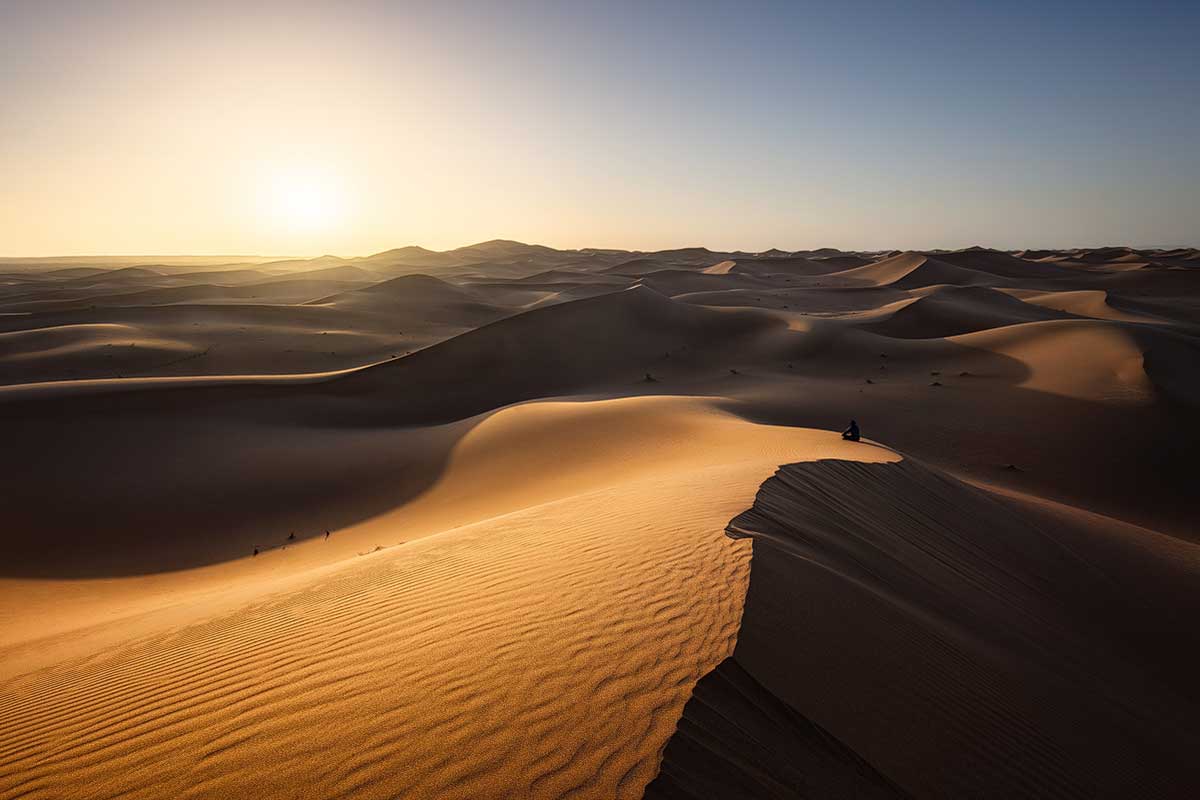
Day 3 gives the valleys their due — the Dades’ rock follies, Todgha’s dawn-lit canyon, Tinghir’s palmery — before the run east. Day 4 is the headline: Rissani’s market, then camels into Erg Chebbi at golden hour, a private camp, drums, the sky.
Days 5–6: the slow road home
Sunrise on the dunes, then west again with the pressure off — the Draa’s palm corridor or the Agdz road, a night in the Ouarzazate oasis belt, Fint or Skoura for the connoisseurs. Day 6 crosses the pass at leisure and lands you in Marrakech by late afternoon, tired in the correct way.
Why six beats four (when you have them)
The 4-day version works — we run it daily (from €600 per person) — but the extra 48 hours converts drive-bys into visits: dawn in a gorge, an oasis walk, a kasbah with nobody in it. Six days from Marrakech runs from €900 per person on our standard baseline, private throughout — never a group — and the 7-day hiking variant (from €1050) adds an Atlas walking day. Camp and season questions in the desert FAQ.
Meryem Chami — Meryem writes itineraries with a planner's eye for the second visit — the routes for people who have already seen Marrakech and the dunes and want the country between them. She specialises in loops that avoid backtracking, coast-to-desert combinations, and the unglamorous logistics (fuel stops, prayer-time closures, market days) that make a route actually flow.


