Rabat is the Moroccan city travellers most often skip and most often regret skipping — a calm, sea-facing capital where the sights are real, the hassle is nearly zero, and an afternoon stretches naturally into a day. Here is what deserves your time.
The Kasbah of the Udayas
A blue-and-white citadel village above the Bou Regreg river mouth — Andalusian garden, ocean platform, and lanes that feel like Chefchaouen with a tenth of the visitors. Come late afternoon when the light lies flat on the Atlantic.
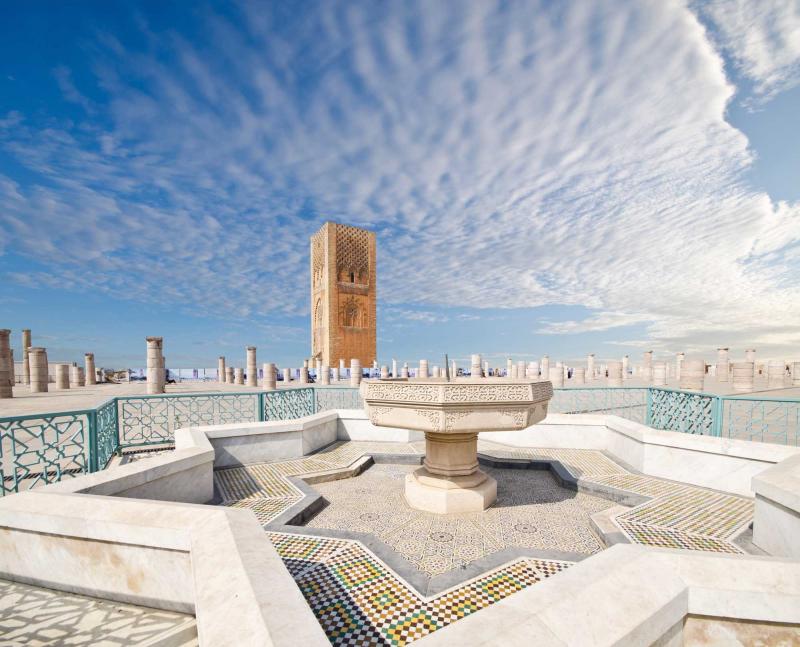
Hassan Tower and the Mausoleum
The unfinished 12th-century minaret and its field of broken columns tell one story; the mausoleum of Mohammed V beside it — marble, zellij and royal guards in red — tells the modern one. Together they are the capital’s signature image.
Chellah
Roman ruins wrapped in a Marinid necropolis wrapped in gardens — and colonised, gloriously, by storks whose nests crown the minaret. Late afternoon brings the clatter of beaks echoing over the whole site. It may be the most atmospheric ruin in Morocco after Volubilis.
The livable city
Rabat’s medina is a working one — good for unpressured browsing — and the ville nouvelle does café terraces, the Mohammed VI museum of modern art, and a seafront that locals actually use. The tram gliding past palm-lined avenues is its own small pleasure in a country of grand taxis.
Fitting Rabat in
The capital slots naturally between Casablanca and the north — one full day is the right dose on our 5-day four-cities circuit (from €750 per person), with more breathing room on the 15-day imperial grand tour (from €2250) — both private, never in a group. Capital questions answered in the Casablanca & Rabat FAQ.
Nadia Berrada — Nadia's beat is the imperial cities — Rabat and Fes above all. She came to travel writing from a family of Rbati craftsmen, which shows in what she notices: zellij patterns, cedar ceilings, the difference between a restored fondouk and a rebuilt one. Her guides lean practical — opening hours that are actually current, quarters worth staying in, and the train timings that make a two-city itinerary painless.


