★★★★★ Rated 4.5/5 — 204 Google reviews · 576 reviews · 5.0/5 on Tripadvisor · Written by a licensed Marrakech tour operator, on the road since 2011
Morocco is one of the last countries where a medina is still a factory — where the thing you buy was hammered, fired or woven a few lanes from the stall that sells it. The great crafts each keep a capital: zellige mosaic and leather in Fes, carpets and lanterns in Marrakech, thuya wood in Essaouira, silver in Tiznit, pottery in Safi, roses distilled at Kalaat M’Gouna. This guide maps who makes what and where, explains how each craft is actually made, tells workshop truth from bazaar theatre, and covers the two things most visitors never learn: which crafts are genuinely endangered, and how to go beyond watching — on our 12-day Artisans tour (from $4500), seven crafts are met in their masters’ own workshops, several with your sleeves rolled up.
The map of the great crafts
| Craft | Capital | What to watch for |
|---|---|---|
| Zellige mosaic | Fes | Tesserae cut by hammer, patterns assembled face-down from memory |
| Leather & babouches | Fes | The Chouara dye pits, working since the 11th century |
| Carpets & kilims | Middle Atlas / Marrakech | Deep-pile Beni Ourain, flat-woven kilims, bright Azilal runners |
| Lanterns & metalwork | Marrakech | Hammered brass married to coloured glass |
| Thuya woodwork | Essaouira | Rose-and-brown burl from a single Atlas forest |
| Silver jewellery | Tiznit | Berber fibulae and enamel, in a walled southern medina |
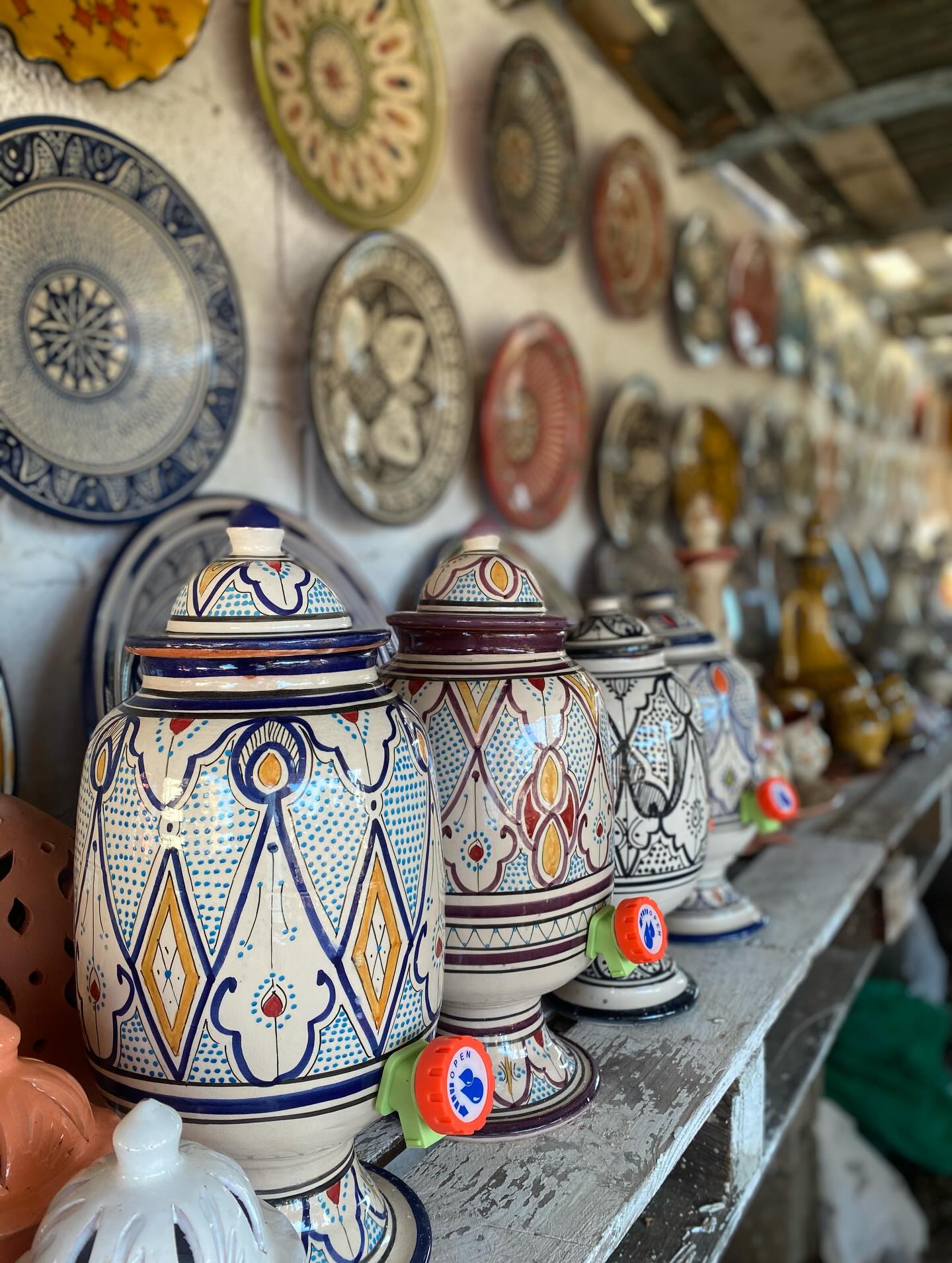
| Pottery | Safi / Fes | Safi’s kilns colour the whole hillside; Fes blue is its own tradition |
| Rose products | Kalaat M’Gouna | 4,200 km of hedges feeding the spring distilleries |
One motif outsells every other at these stalls: the khamsa, the open palm pinned over doorways across the country. Before buying one, read our guide to the Hand of Fatima in Morocco — what the symbol means, and how to tell hand-worked silver from casting.
The architectural arts: zellige, plaster and cedar
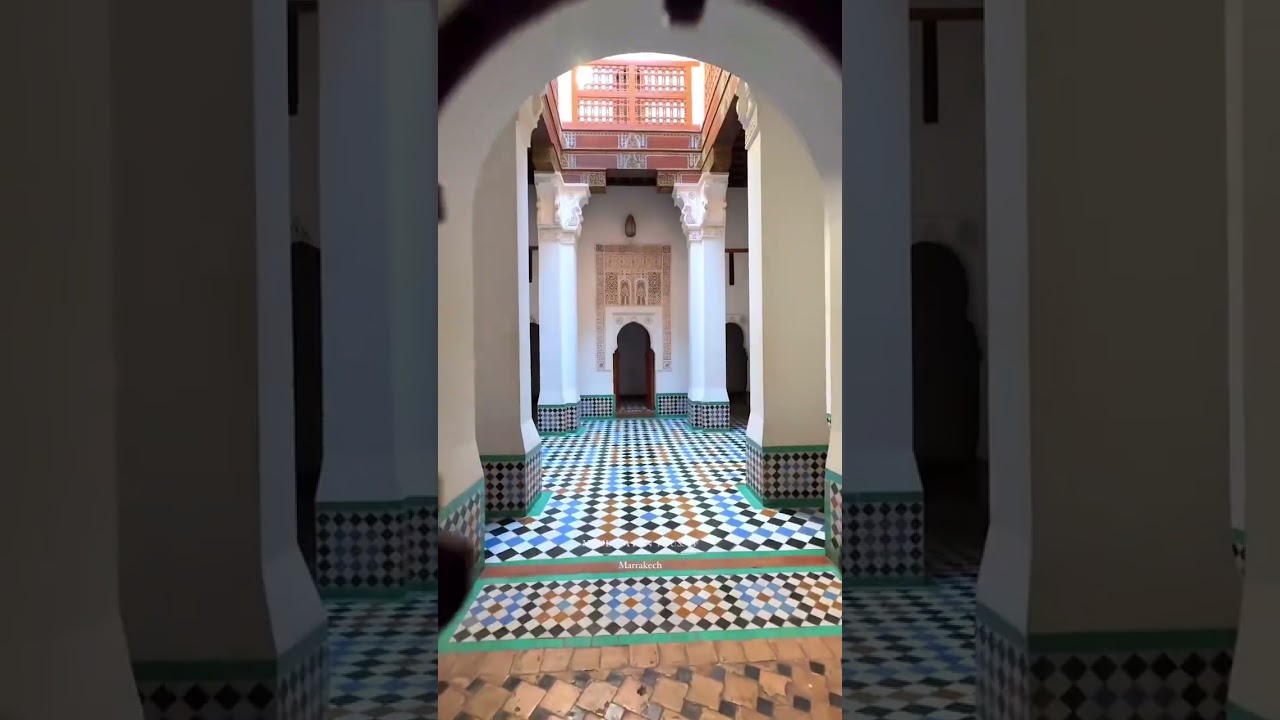
Zellij — the geometric mosaic of hand-cut glazed tiles — reaches its summit in Fes, where apprentices still cut tesserae with a sharpened hammer and masters assemble patterns face-down, blind, from memory: the design exists in the head, the colours lie reversed on the floor, and the truth is revealed only when the panel is turned. Around zellige live its sister arts — gebs, the carved plaster lacework, and zouak, painted cedar — the trinity that decorates every madrasa you will photograph. The madrasas of Fes and Marrakech (Bou Inania, Ben Youssef) are their museum; the workshops three lanes away are their maternity ward. A real zellige atelier announces itself by sound: it clinks, constantly.
Leather, from pit to babouche
The Chouara tannery in Fes has dyed hides in the same honeycomb of stone pits for roughly nine centuries: pigeon lime to soften, poppy for red, indigo for blue, the terraces above renting their view to the leather shops whose mint sprig is both hospitality and gas mask. The finished art is the babouche, and the gap between a five-euro pair and a twenty-five-euro pair is visible in ten seconds of a maker’s stitching — which is why our artisans route includes a babouchier making a pair before your eyes, from dyed hide to final stitch, and why you will never look at bazaar racks the same way again.
Carpets: the craft most visitors buy blind
Every region knots or weaves differently — deep-pile Beni Ourain whites from the Middle Atlas, flat kilims from the plains, Azilal’s bright improvisations — and each honest piece carries weeks of a woman’s work. The buying rule we give every traveller: learn before you negotiate. A women’s weaving cooperative (we include one in Marrakech) shows the techniques at fixed prices with the weaver paid; an hour there calibrates your eye and your numbers before any bazaar theatre begins. Then haggle happily — it is sport, not war — knowing what the loom-time is worth.
Wood, metal and fire: the object crafts
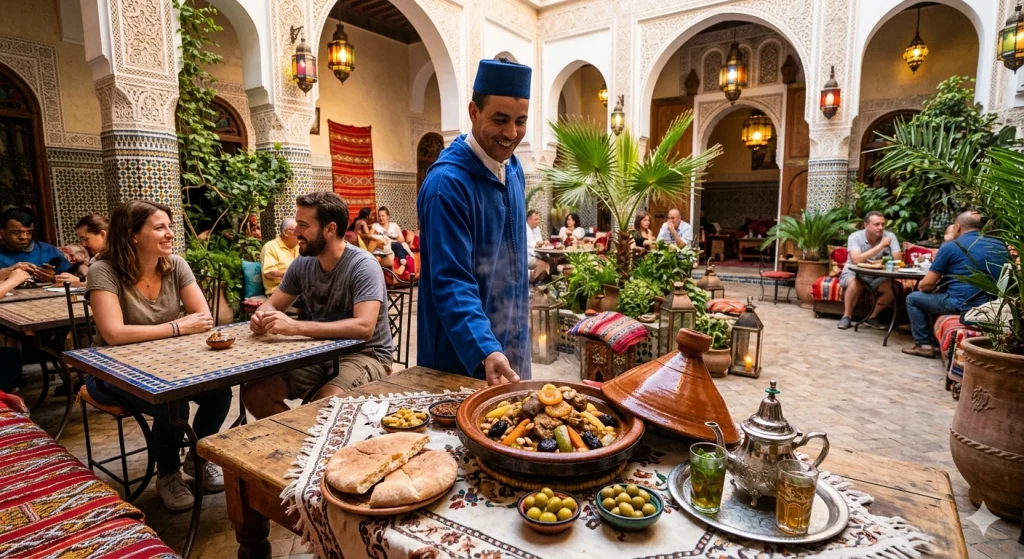
Essaouira’s carvers work thuya burl — a wood that exists commercially almost nowhere else on earth — into boxes, tables and inlay, scented like its own forest; on our route, the master hands you his tools and the sanding of your own piece. Marrakech’s lamp makers cut and solder hammered metal around coloured glass, and the finished object is really a projector: lit, it throws its geometry across the walls. And the tajine itself is craft before it is cuisine — shaped on Safi’s and Fes’s wheels; shaping one with a master potter, then cooking in it, is the single most popular workshop of the artisans itinerary.
Which crafts are genuinely endangered
Three are on the honest watch-list. Metal-on-metal inlay — silver thread hammered into engraved steel — survives in a handful of workshops worldwide. Hand-cut zellige competes against factory tile that imitates its look at a tenth of its cost and none of its soul. Thuya carving depends on one managed forest and a shrinking bench of masters. Buying directly in the maker’s workshop — provenance certain, price honest, no reseller margin — is the most effective preservation a traveller can practise. It is also, not coincidentally, how you get the best pieces.
Workshop truth vs bazaar theatre: five tells
Real workshops are noisy (work has a sound), messy at the edges (production leaves evidence), staffed by people mid-task who barely look up, priced without panic (makers know their worth and rarely chase you down the lane), and specific — one craft, deep, not everything under one roof. The “cooperative” with spotless floors, a tour-bus park and all eight crafts conveniently assembled is a shop with a costume. Shops are fine; just know which one you are in.
A buyer’s day, done right
The sequence matters more than the stamina. Morning, learn: one cooperative or museum-grade workshop per craft you care about — the kilim cooperative for rugs, the zellige atelier, the tannery terrace — where prices are fixed and questions are welcome; this hour calibrates your eye and your numbers. Midday, walk away: survey the bazaars without buying; note three stalls whose pieces survived your newly educated eye. Late afternoon, negotiate: return to one stall, with tea, with humour, with a genuine walk-away number — the hour before closing is the hour prices soften. Never: buy in the first hour of the first day, follow a helpful stranger to his ‘cousin’s shop’, or let a guide’s detour choose your wallet’s destination (ours are instructed never to; it is in writing). Shipping: reputable rug houses ship insured worldwide and have for decades — get the terms on the invoice, photograph the piece beside it.
Going beyond watching
The 12-day Artisans tour threads seven workshops along the caravan roads that created them — Fes’s babouchier, zellige master and potter; Marrakech’s kaftan maker, kilim cooperative and lamp atelier; Essaouira’s thuya carver — with a luxury Sahara camp night and a 34-hectare vineyard lunch stitched between, because the craft roads were trade roads first. You come home with a tajine you shaped, a kaftan cut to you, and an inlay you sanded; allow luggage room. For buying tactics, shipping and haggling etiquette, the Shopping & Crafts chapter of our FAQ answers the practical questions plainly.
The rug questions everyone asks
Are Moroccan rugs good quality — and are they really cheaper in Morocco?
The handmade ones are superb: dense wool, vegetable dyes, decades of life in them. Bought at source — cooperative or maker — they cost a fraction of Western boutique prices for the identical piece; bought in a tourist bazaar without calibration, the gap narrows fast. Learn at a cooperative first, then negotiate.
Do Moroccan rugs shed, and can you wash them?
New wool pile sheds for a few weeks, then settles. Vacuum without a beater bar, rotate seasonally, and for real cleaning use a wool specialist — never a washing machine. Flat-woven kilims are the low-maintenance choice for high-traffic rooms.
Are the Moroccan rugs on Etsy and online shops legit?
Many are genuine, some are machine-made pretenders, and photographs cannot tell you which. The three online tells: a named region and weave type, wool-content honesty, and seller willingness to video-call the actual piece. Or buy where provenance is physical: the cooperative floor, with the weaver present.
Does argan oil really only come from Morocco?
Essentially yes — the argan tree grows almost nowhere else on earth; the Arganeraie belt between Essaouira and Agadir is a UNESCO biosphere reserve, and the women’s cooperatives there are both the authentic source and the fair price. Supermarket ‘argan’ elsewhere is diluted more often than not.
What souvenirs are actually worth buying in Morocco?
The made-here list: rugs and kilims, thuya woodwork, babouches from a maker, hand-cut zellige pieces, Tiznit silver, Safi ceramics, rose products from Kalaat M’Gouna, and argan from a cooperative. The skip list: anything sold identically in every stall — it ships from the same factory abroad.
Everything on this page can be woven into a private itinerary — start from historical sites of Morocco or book the 7-day Imperial Cities circuit, and we shape the rest around you.
Zineb Lahlou — Zineb writes about Moroccan traditions, crafts and celebrations. She grew up between Fes and Casablanca in a family where every wedding involved three cities' worth of relatives, which turned out to be excellent training for explaining Moroccan social life to visitors. Her beat runs from zellij workshops to Gnaoua music to the etiquette of a hammam.