★★★★★ Rated 4.5/5 — 204 Google reviews · 576 reviews · 5.0/5 on Tripadvisor · Written by a licensed Marrakech tour operator, on the road since 2011
A riad is a traditional Moroccan house built around an open courtyard — and understanding the idea explains half the magic of sleeping in one. The word comes from the Arabic for garden, and the garden is the whole point.
The architecture of privacy
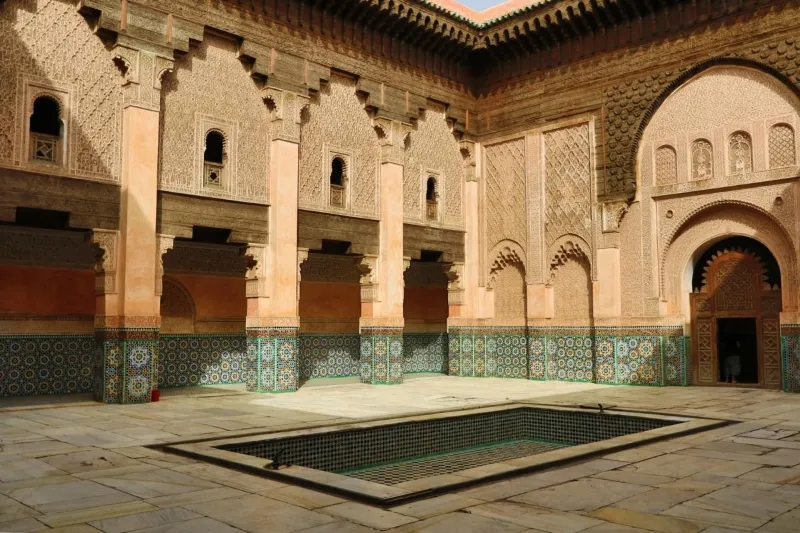
From the derb, a riad shows you nothing: a blank wall, a studded door. Everything faces inward — rooms wrapped around a courtyard open to the sky, often with a fountain, orange trees, a rooftop terrace above. It is the architectural opposite of a sea-view hotel: the luxury points in, toward stillness, shade and the square of sky.

From family houses to guesthouses
These were merchant family homes for centuries. As families moved to the new town, foreigners and Moroccan hoteliers restored them — zellij tilework, carved cedar, tadelakt plaster — into guesthouses of usually four to eight rooms. Small is structural: breakfast made when you wake, staff who know your plans, advice that beats any app.
Riad or hotel — the honest trade-offs
Riad wins: atmosphere, personal care, medina immersion, courtyard quiet. Hotel wins: pools of real length, lifts, cars to the door, anonymity if you want it. Light sleepers note: courtyards carry sound, and the dawn call to prayer is part of the deal (most guests grow to love it).
How we choose them
Our circuits sleep in riads wherever the medina allows — selected for beauty, breakfast and the quality of the welcome, then named in your quote so nothing is generic. The wider sleeping-and-eating questions live in the hotels & daily life FAQ.
Everything on this page can be woven into a private itinerary — start from Morocco city breaks or book the 7-day Imperial Cities circuit, and we shape the rest around you.
Salma Benkirane — Salma writes about the Marrakech that sits one layer beneath the postcards — riad architecture, garden history, the hammam ritual, and where the city's craftspeople actually work. She spends most of her research time walking: a route is only recommended here after she has timed it, priced it and found the shade along the way. Her favourite hour in the city is the one just after the dusk call to prayer, when the lanes north of the Ben Youssef Medersa go quiet.