★★★★★ Rated 4.5/5 — 204 Google reviews · 576 reviews · 5.0/5 on Tripadvisor · Written by a licensed Marrakech tour operator, on the road since 2011
What does VIP travel in Morocco actually mean? Strip the word of its airport-lounge connotations: here it means full-day private guides in every great city rather than shared half-days; nights in restored notables’ mansions inside the medinas rather than hotels outside them; a dedicated driver whose schedule is yours, not a manifest’s; and the staging — mosque interiors timed to their morning openings, the ksar before the buses, the desert camp’s best tent, the table reserved before you boarded. It is guiding density and access made visible. The format exists because nine or ten days covering four imperial cities, the Sahara and the kasbah road is a dense hand, and the VIP treatment is what keeps density from becoming endurance. This guide details what changes at this tier, walks the 9-day route day by day, prices the choice against its neighbours, and says plainly who should not buy it.
The three things the VIP tier changes
Guiding becomes the trip’s engine
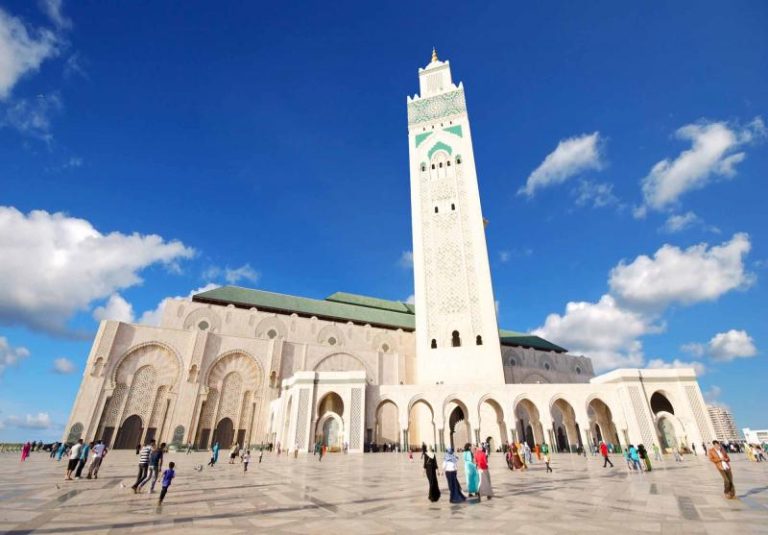
On a standard tour the guide appears for a half-day in Fes and another in Marrakech; everything between is driving and self-navigation. At VIP tier, Casablanca, Fes and Marrakech each get a full-day private specialist, and the difference compounds hour by hour: the Hassan II Mosque explained by someone who can read its calligraphy, the tannery terrace before the crowds, the fondouk whose door opens because your guide knocked, the pause that becomes the day’s best conversation. You are not sightseeing; you are being tutored by the city’s own. And the tier turns an ordinary dawn into an occasion: the Royal hot air balloon flight over Marrakech, the basket kept for your party alone.

The nights carry history
Restored 19th-century mansions in the Fes and Marrakech medinas — carved cedar, painted ceilings, courtyards that once received caids — an opulent desert-view riad at Merzouga, and a luxury camp in the dunes: every night sleeps somewhere with a story, and none requires leaving the old city for a hotel district. The mansion is not accommodation near the destination; it is the destination, continued after dark.
The logistics disappear
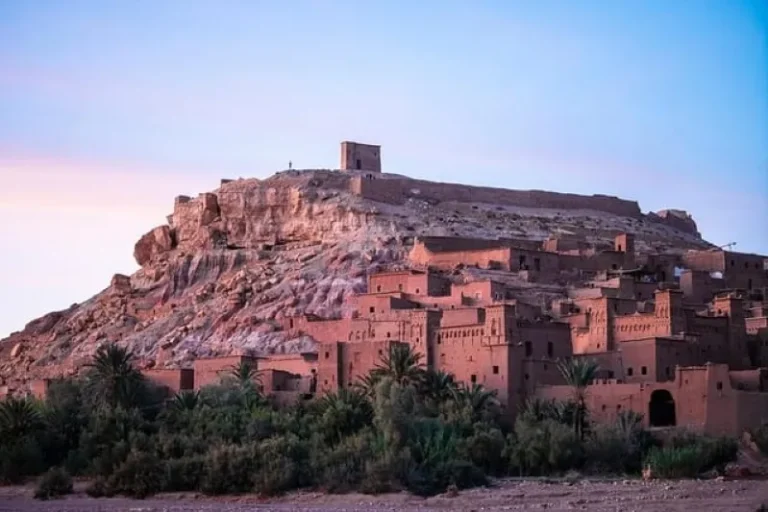
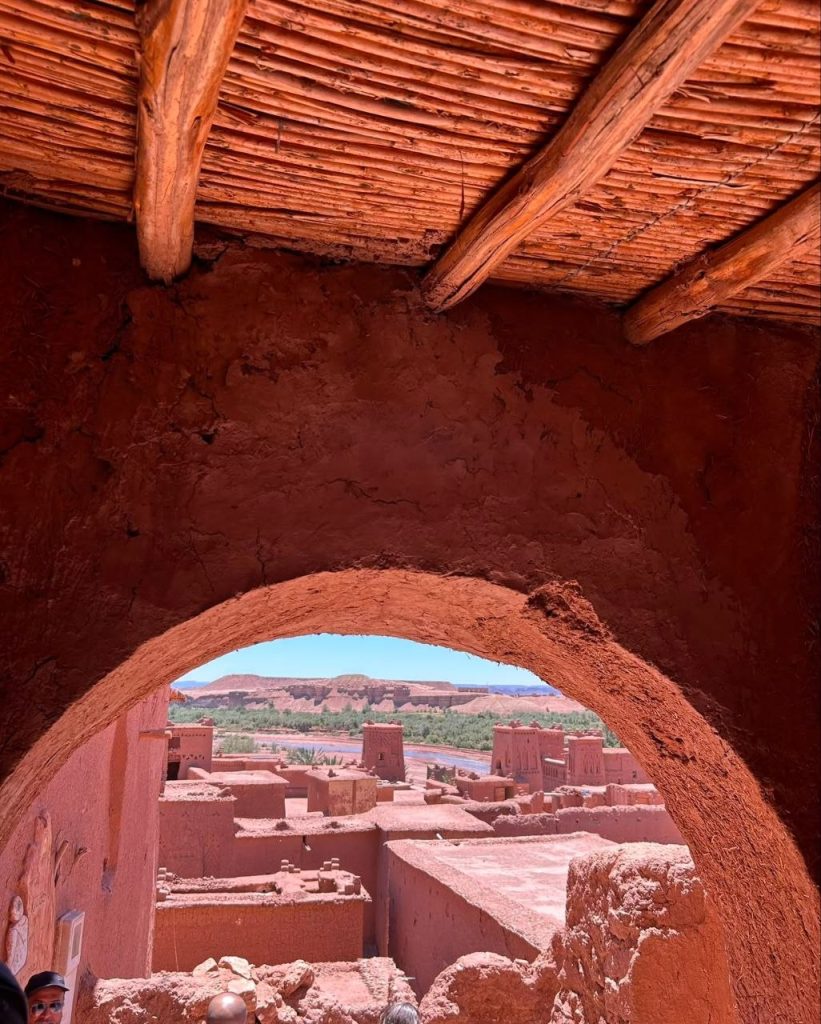
Timings bend around realities that schedule-driven tours cannot honour: the mosque’s morning-only interiors, Aït Ben Haddou before the buses, the dunes at the exact sunset hour, the rose valley when the light is low. A dedicated vehicle and a guide-network that answers the phone make the whole country run on your clock.
The 9-day VIP route, day by day
| Day | Where | The VIP texture |
|---|---|---|
| 1 | Casablanca | Full-day private tour; the Hassan II’s Murano chandeliers and 200 m minaret, explained properly |
| 2 | Rabat — Meknes — Fes | Bab el-Mansour and the 12,000-horse stables en route; night one in a notable’s mansion |
| 3 | Fes | Full-day private guide in the best-preserved medieval city on earth; rooftop mint tea over the medina |
| 4 | Ifrane — Ziz Valley — Merzouga | The Middle Atlas crossing; an opulent riad whose terrace stares into the desert |
| 5 | Dayet Srji — Erg Chebbi | Flamingos on the salt lake, then the camel trek to a luxury camp; fire-cooked dinner under the stars |
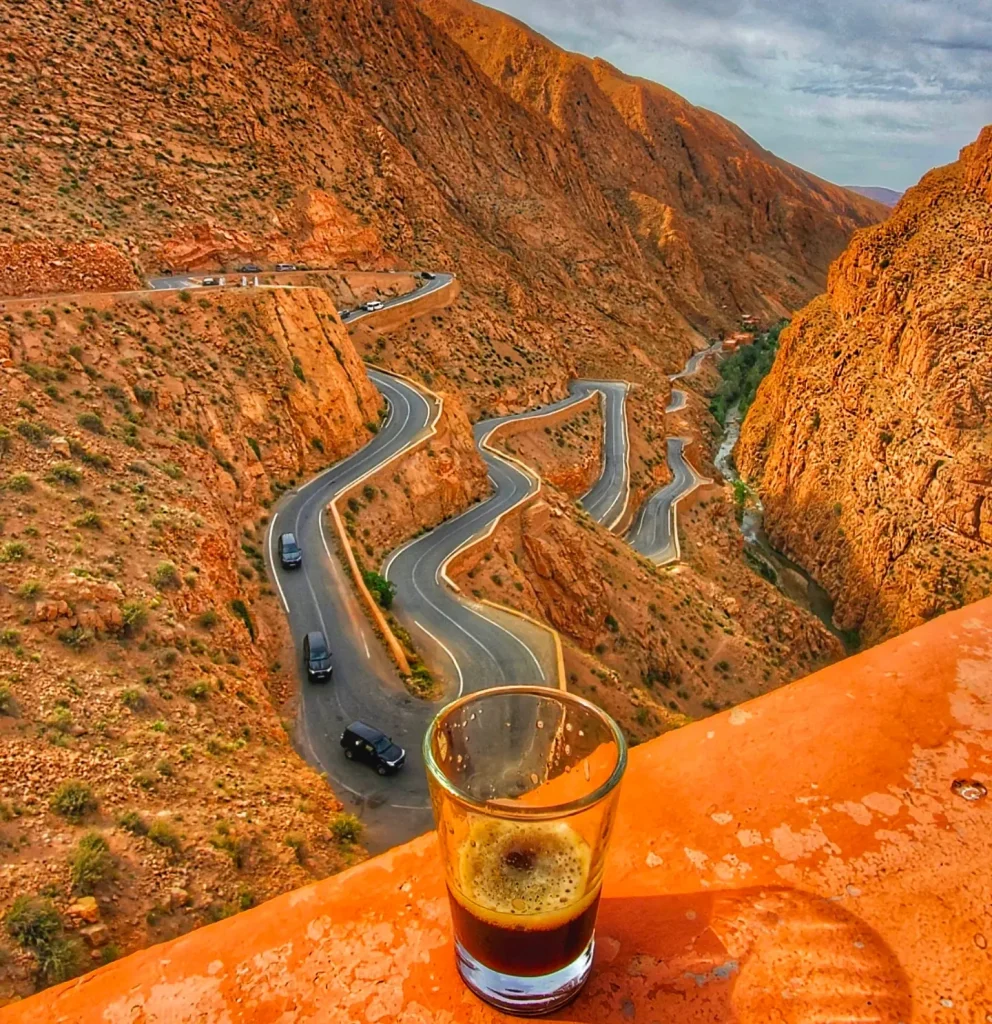
| 6 | Dunes — Todra — Dades | Dawn over the 28 km dune sea; the gorge’s polished walls; a luxury kasbah night |
| 7 | Road of 1,000 Kasbahs — Marrakech | Kalaat M’Gouna’s rose country, Aït Ben Haddou, arrival at a historic mansion |
| 8 | Marrakech | Full-day private guide: Djemaa el Fna, the souks, the Bahia’s silk-panelled harem wing |
| 9 | Departure | The fountain, the waking medina, the escorted transfer |
The route: VIP Morocco Tour – 9 Days, from $11700 per person, every property and guided day named in the written quote.
The desert, VIP class, in detail
Day five deserves its own paragraph, because it is where this tier shows most. The approach is staged: Dayet Srji’s salt lake first — flamingos and falcons at the desert’s doorstep, a scene most itineraries drive past — then the camels at the golden hour, pacing into an erg that runs 28 kilometres with crests to 150 metres. The camp is the small luxury kind: your tent held in advance, ensuite, dinner cooked over fire, drums that end when you want the silence. And dawn is not optional filler — it is the appointment the whole route was quietly built around: the dune sea turning from deep blue to gold, photographed from the ridge your guide walked you to the evening before, because he knew where the light would come up. The jeep waits below for travellers whose knees have opinions about camels; the standard bends, the night does not.
Priced against its neighbours
Three of our tiers orbit the same price altitude, and the honest differences matter. The 8-day City to Desert (from $10200) concentrates the budget on five-star Marrakech and the Sahara — fewer cities, deeper comfort, the activity list written in. The VIP 9-day (from $11700) spreads the same class across all four imperial capitals with the guide-density as the defining spend. The 13-day Grand Luxury (from $16900) buys four more days, the blue north and a second desert night. Below all three, the Royal journey (from €1500) remains the honest classic — and our luxury tiers guide compares the whole range line by line.
What “access” means here, concretely
The word gets abused, so here is its content on this route. Timing access: the Hassan II interior on its morning schedule; Aït Ben Haddou at the hour the ksar is empty; the dunes at true sunset rather than the convoy’s sunset. Door access: working fondouks, artisan ateliers and private houses that open to known guides and stay shut to crowds — the kind of rooms where the visit becomes a conversation. Knowledge access: licensed specialists who can read the calligraphy over the gate, date the zellige underfoot, and answer the tenth question better than the first. None of this is velvet rope; all of it is relationships, and relationships are what a 2011-founded operator actually sells.
Languages, pacing and party size
VIP departures run with English- and French-speaking driver-guides as standard and Spanish-speaking city guides on request. The format is at its best from two to six travellers — one vehicle, one conversation — and scales to multi-vehicle family departures where the staging (and the quote) adapts per generation. Pacing flexes daily: the full-day guides are yours, which means they are also yours to release early when a courtyard and a book win the afternoon. Nothing on this tier is compulsory except the standard.
Practical questions, answered the VIP way
Can the 9 days extend? Yes — Chefchaouen adds naturally after Rabat, Essaouira after Marrakech; the quote restates itself around your dates. Dietary requirements? Communicated once, honoured everywhere — this is precisely what a dedicated driver-and-guide chain is for. Is the desert night skippable? It can swap for a second Fes or Marrakech night, though almost nobody who reads day five’s description asks twice. Payment and confirmation? As across our range: a written, itemised quote first, no payment at that stage, every property named. The tier changes the trip, never the honesty of the paperwork.
For the ground layer alone, two dedicated pages detail the machinery: political and diplomatic transport (protocol chauffeurs, motorcades, movement sheets) and VIP transport in Casablanca for the business capital’s airport-roadshow-Rabat triangle. The full fleet and day rates are set out on our luxury transportation in Morocco page, and for a car with a professional driver by the day or week, chauffeur-driven car hire covers it.
Who the VIP tier is for — and who should not buy it
It is for the traveller whose single Morocco trip must contain everything, done once and properly; the one for whom the guide is the point — collectors, historians, the professionally curious; and the one travelling at a life moment that deserves staging. It is not for travellers who treasure unplanned wandering above all (the VIP calendar is gloriously full — that is its nature), nor for desert purists, who should put the budget into the 11-day Chigaga immersion instead, where the luxury is wilderness itself. Saying so costs us nothing and earns the quote your trust — which is rather the VIP philosophy in one sentence. Send your dates on WhatsApp; the itinerary that returns will be built to the standard this page describes, in writing.
Questions travellers ask about private touring
How much does a private tour of Morocco cost?
Our published ladder: from €150 per person per day for classic private circuits (car, driver, guide, hotels included), rising through the luxury tiers to $11700 for the 9-day VIP and $16900 for the 13-day flagship. Every quote is written, itemised and priced before any payment.
What is the difference between a private guide and a driver-guide?
The driver-guide travels with you throughout — roads, logistics, context between cities. The licensed city guides are specialists who join for the great medinas, where the law and the depth both call for them. VIP tier means the city specialists work full days, not half.
How do I check a Morocco tour company is legitimate?
Four checks: a verifiable tour-operator licence (ours: 1550/TOUR/2018, operating since 2011), public reviews under one consistent name, written itemised quotes before payment, and their own drivers and guides rather than brokered ones. Any serious operator shows all four without being asked twice.
How much should I tip a private guide and driver?
Tipping is customary and discretionary: as a working range, think in a few hundred dirhams per day for a guide who earned it, somewhat less for the driver, adjusted to your satisfaction and party size — handed directly, at the end, with thanks. Nobody on our teams will ever solicit it.
Everything on this page can be woven into a private itinerary — start from the travel FAQ, and we shape the rest around you.